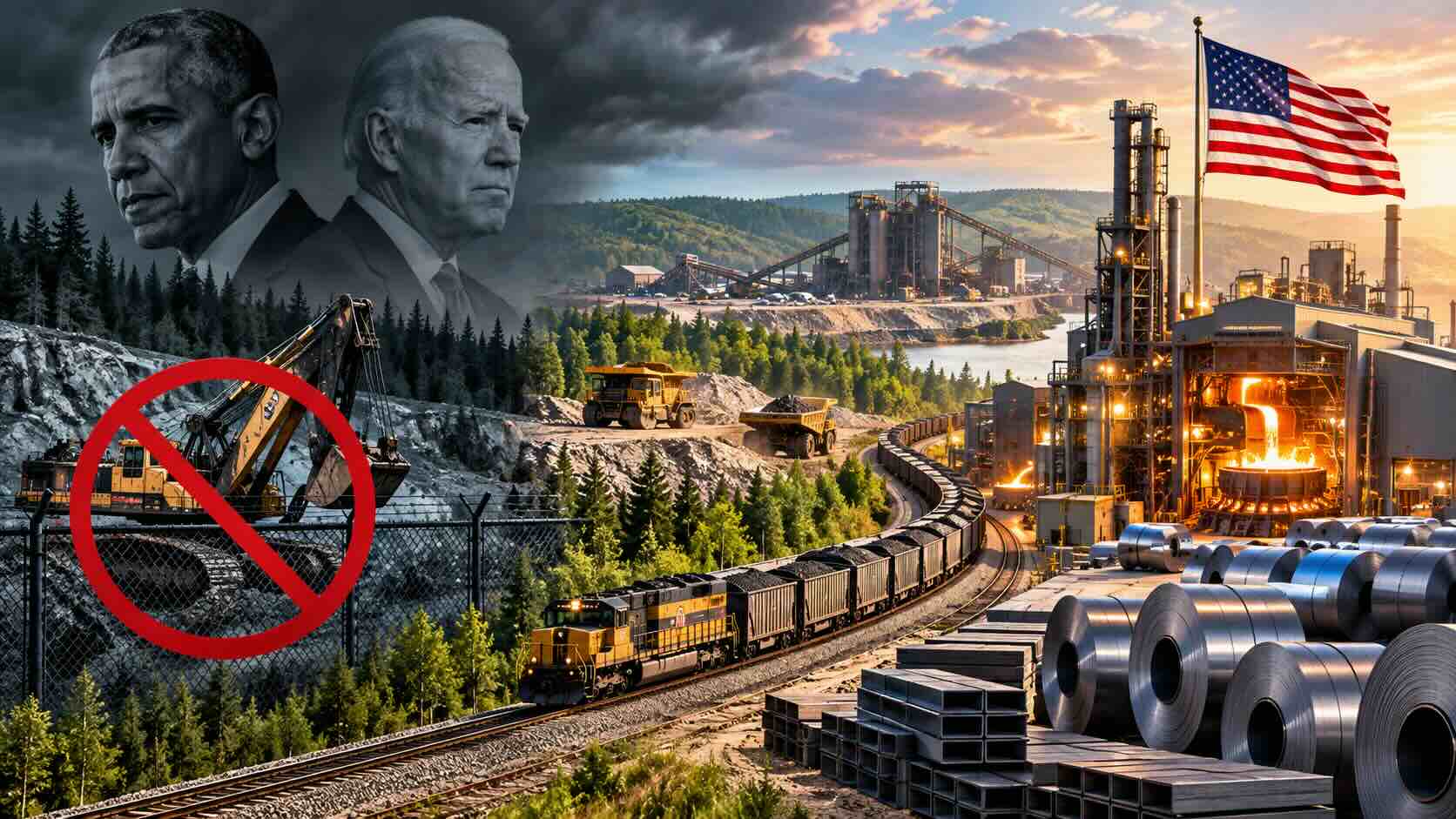
In 2016, the Obama administration blocked a proposed northern Minnesota copper-nickel mine by denying its federal Bureau of Land Management lease renewals. The Trump administration restored those leases, and Twin Metals filed a formal mine plan.
The Biden administration canceled the leases again in 2022, then banned mining for 20 years across 225,504 acres of the Superior National Forest, all while revoking a key federal water permit for another long-stalled copper-nickel mine. In 2024 they piled new rules onto taconite iron-ore processing and coke ovens, the plants that feed American steel, while imported finished steel still held about a quarter of the U.S. market.
This was not the only project stopped under Biden. In Alaska, a 211-mile road that would have opened a copper and cobalt district never got built.
Acting against that record of stop-and-starve federal mining policy,
President Donald J. Trump announced on Monday one of the largest steel plants in American history, a $15 billion Mesabi Metallics mill in Iowa.
The project is projected to create 1,750 permanent Iowa jobs, support up to 6,000 construction jobs, and add about $95 billion to the U.S. economy over construction and the plant’s first decade. First-phase output is 7.5 million tons of steel a year, later rising to about 10 million, using iron ore from Mesabi’s newly opened Minnesota mine, the first new U.S. iron ore mine in 50 years.
This is an interstate American operation. Ore is blasted and pelletized on Minnesota’s Iron Range, then melted and poured in Iowa. The White House and the company are selling a closed U.S. loop so the steel that goes into cars, appliances, infrastructure, and defense work does not have to start as someone else’s raw material.
Mesabi, an Essar Group company, has put $2.5 billion of equity into the Nashwauk mine after years of delay and a 2016 bankruptcy under a prior corporate form. The mine is built for high-grade direct-reduction pellets used by electric-arc furnaces, which now make most American steel. Those pellets are supposed to move south into Iowa instead of sitting as an isolated mining asset or leaving the country as feedstock for somebody else’s mill.
At an Oval Office event, Mesabi chairman Rewant Ruia and CEO Joe Broking stood with Commerce Secretary Howard Lutnick, Iowa Gov. Kim Reynolds, and Reps. Mariannette Miller-Meeks and Ashley Hinson. Trump revealed the steel would be mined, melted, and made in the U.S. Lutnick said the Iowa deal was done. Reynolds said the project changes the trajectory of one of the state’s most depressed regions. Hinson said Iowa already feeds and fuels the world, and now joins the manufacturing story.
Miller-Meeks placed the mill in Lee County. A specific parcel has not been formally locked by the company, and local officials still want the public package on roads, gas, power, rail, and housing. First steel is slated for around 2030. The nearer-term American yield is the construction payroll and the Minnesota mine that is already working. The longer-term yield is a Midwest mill large enough to matter.
Thanks to President Trump, steel policy flipped after 2025. Raw steel output is up 9% since Trump returned to office. Nearly 6,000 steelworker jobs have been added after almost 10,000 were lost under the prior administration. American mills now supply 84% of the U.S. finished steel market, up from 77% in 2024. New mill orders hit $17.3 billion in July 2026. Domestic shipments hit $16.9 billion that month. Officials tie those numbers to 50% Section 232 steel tariffs, faster permitting, and domestic energy.
The United States surpassed Japan in crude steel production in 2025 for the first time since 1999 and is now the world’s third-largest producer.
Eastern Iowa is in line for a heavy-industry footprint it has not had in generations. Minnesota ore stays in a U.S. supply line, and the work stays in American towns. That is this administration’s commitment. Bring the jobs home, keep the steel American, and run the mine-to-mill chain from Minnesota to Iowa instead of from a foreign dock to a U.S. factory floor.
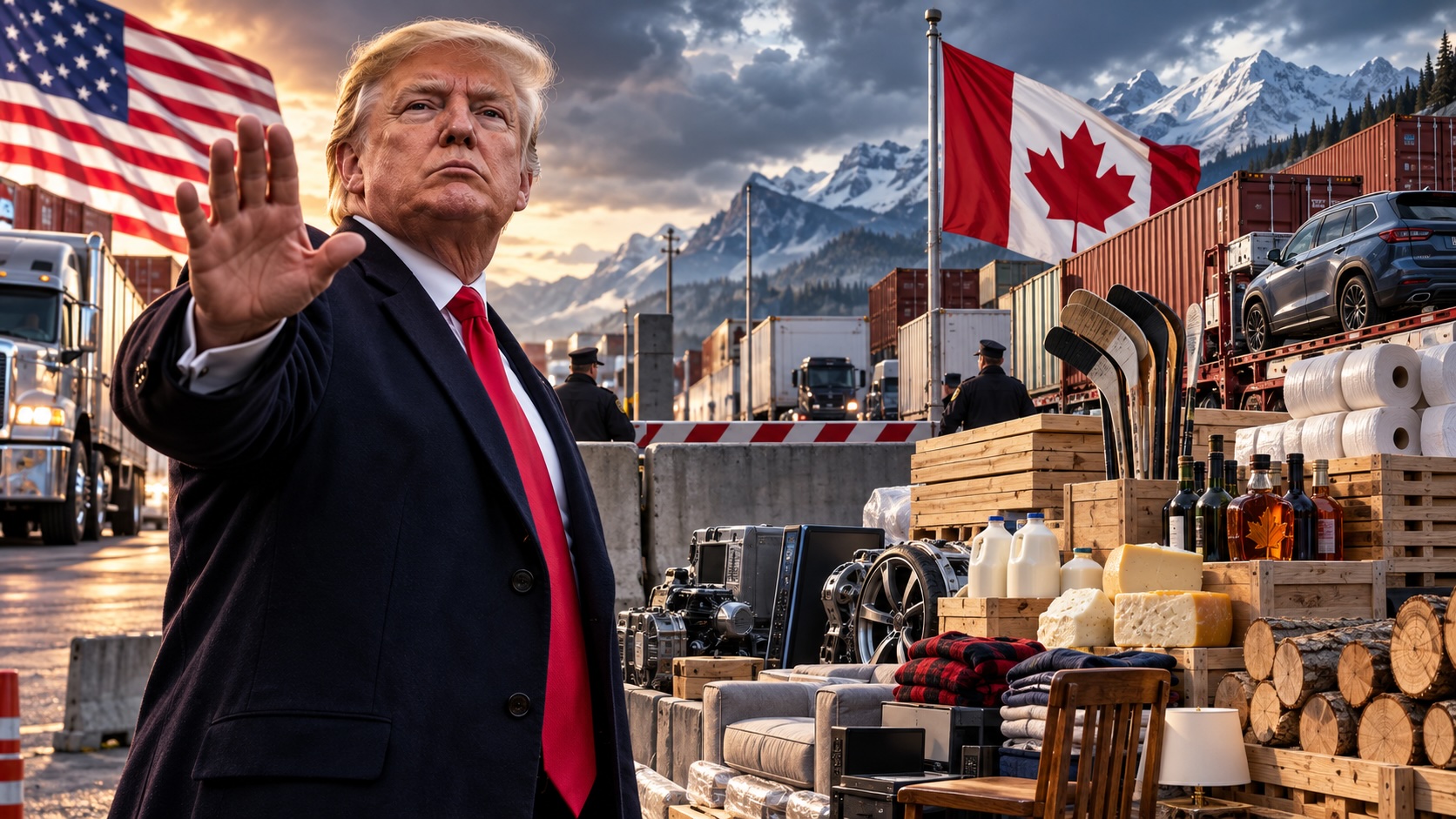
Back in July, President Donald J. Trump stood up to Canada and used Section 338 of the Tariff Act of 1930 to put a 50% tariff on a wide list of Canadian goods. The legal findings were about Ottawa’s treatment of American alcohol, dairy, and motor vehicles. The annexes went further than those three sectors. They also hit hockey sticks, paper, wood products, clothing, electronics, furniture, and more. USTR put the package at about $20 billion, or roughly 5% of U.S. goods imports from Canada. The duties took effect in late August, after a three-day pause.
The White House warned that if Canada answered with matching tariffs, the next step would not be another tax. It would be a closed market for part of the list.
Canada answered dollar for dollar. On September 8 it put levies of 15, 25, and 50% on 19.5 billion including steel, dairy, farm equipment, appliances, furniture, clothing, and electronics. Provincial liquor boards had already yanked American bottles off the shelves.
Section 338 lets the President add duties of up to 50% on goods that face unequal treatment abroad. If that treatment is maintained or increased after the duties take effect, the same statute lets him exclude products from importation. The provision has been on the books since Smoot-Hawley.
Washington threatened France, Spain, Germany, Japan, and China with it in the 1930s and in 1949. No president ever imposed the duties or the ban. Trump is the first to enforce the law and demand that American goods get a fair shake.
On September 8, after Canada’s counter-tariffs took effect, the President signed five more orders. Three turned part of the July list into an outright ban effective September 29. Two reshuffled the remaining duty lists effective September 15. Rock salt and cement came off.
ATVs and more dairy went on. Canada still limited how much American milk and cheese could come in and charged a high tax on anything above that limit. The auto rules Washington complained about had not changed. Those two fights were still open when the ban hit.
At 12:01 a.m. Eastern Time on September 29, 2026, importation of Canadian goods under 68 Harmonized Tariff classifications was shut off. Fifty-three of those lines are alcoholic beverages. Fourteen are dairy-related. One covers large motorcycles, as reported by the New York Post.
The ban is narrow. Packaged beer, wine, spirits, cider, and nonalcoholic beer are out. Bulk alcohol for U.S. bottling can still enter at 50%. Whey and molasses are barred. Most cheese is not. Motorcycles and mopeds over 800 cc are blocked, including Can-Am’s Spyder and Canyon. Customs will unconditionally reject those lines.
The banned trade is under $1 billion. Most of it is drinks.
This is not a blockade. Capital Economics puts the ban at roughly 0.25% of Canada’s exports to the United States. Two-way U.S.–Canada goods and services trade was an estimated $872.3 billion in 2025. Crude, gas, and power still move. Goods imported before the cutoff, but not yet entered for consumption, can still come in at the 50% rate set in July. Everything on the September 29 annexes does not come in at all.
The Trump administration’s test is clear and non-negotiable. If American commodities do not get the same treatment Canada gives others, Washington will not keep the U.S. market open for those Canadian goods. July was the tax. Midnight was the method. Sixty-eight Harmonized Tariff numbers are no longer a bargaining chip. They are out until the terms change.
When Vice President JD Vance recently declared at the Richard Nixon Presidential Library that “his historical legacy is enjoying a bit of a renaissance, but I think deservedly so,” he put into words something that has become increasingly evident. Thanks also to the extraordinary efforts of the Richard Nixon Foundation, the record of America’s 37th president—beyond Watergate—is undergoing a remarkable reexamination and reevaluation. Among a younger generation in particular, this renewed fascination with Nixon has even acquired its own distinctly modern name: “#Nixonmaxxxing.”
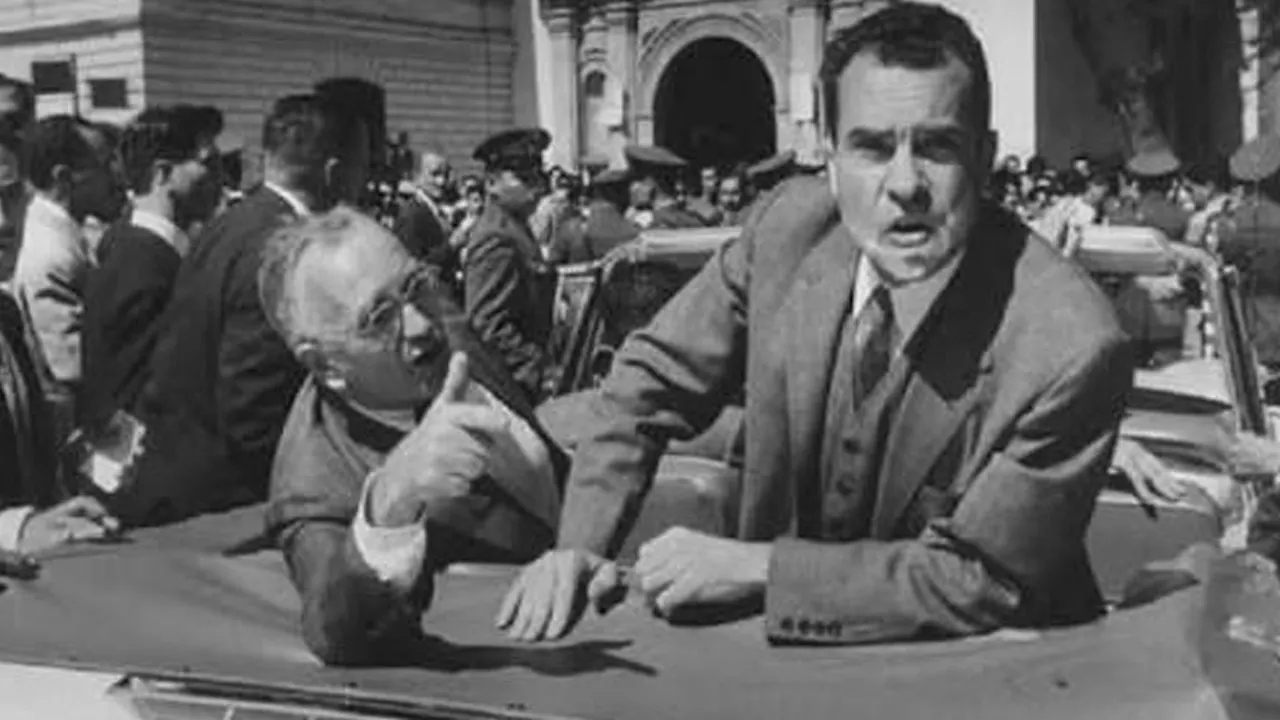
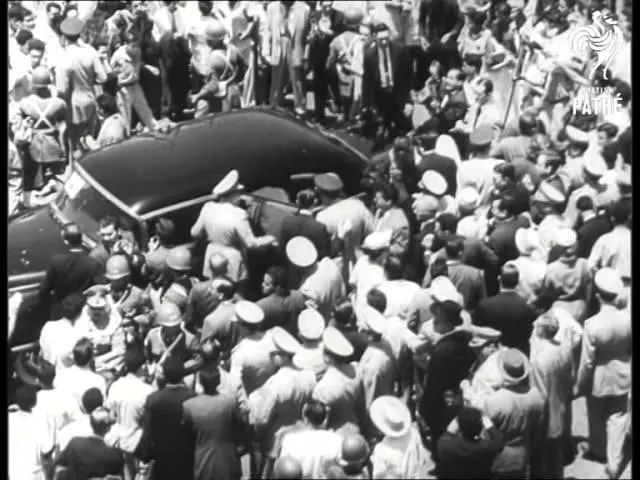
On May 13, 1958, Vice President Richard Nixon arrived in Caracas on what was supposed to be the final stop of an eighteen-day goodwill mission through South America. Instead, he and his wife, Pat, walked into one of the most dangerous episodes ever faced by a sitting American vice president abroad. Venezuela was only months removed from the overthrow of dictator Marcos Pérez Jiménez, anti-American feeling was being aggressively exploited by the Communist left, and Nixon had already encountered violent demonstrations in Peru. But nothing prepared the American party for Caracas. Even before Nixon left the airport, demonstrators shouted insults, blew whistles, waved hostile placards, hurled stones and subjected both Dick and Pat Nixon to what a subsequent Secret Service account described as showers of human spittle and chewing tobacco. Contemporary TIME reporting described older organizers whipping up a student crowd carrying slogans associated with international Communism. Nixon nevertheless proceeded with the mission rather than retreating.
The hostility began almost immediately. As the Nixons walked toward their automobiles, demonstrators spat at them so heavily that, once safely inside the cars, both Dick and Pat reportedly used handkerchiefs to wipe the saliva from their faces and clothing. Protesters attempted to drape banners across the windshields of the motorcade vehicles in an effort to obstruct the drivers’ vision. Pat Nixon, displaying remarkable composure of her own, even reached toward one jeering teenage girl and took her hand, momentarily silencing her. The motorcade nevertheless pressed ahead toward Caracas.
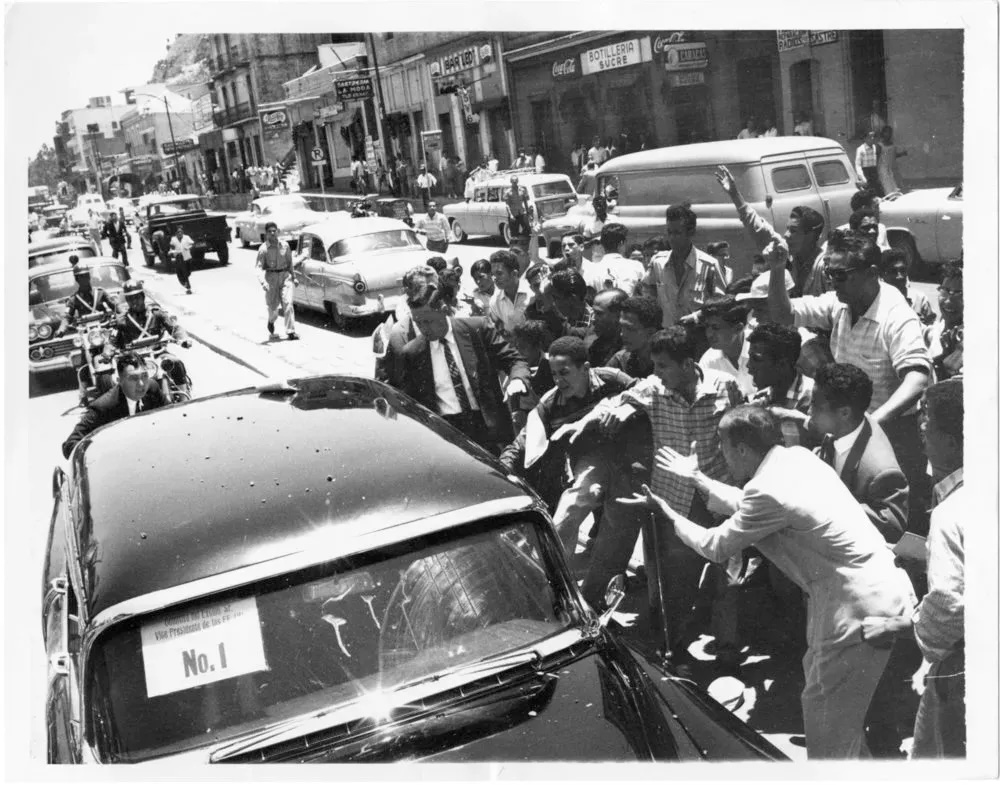
The danger rapidly became more serious. Nixon was scheduled to lay a wreath at the tomb of Simón Bolívar, the great liberator of South America. But the American naval attaché carrying the wreath ahead of the vice president was attacked, roughed up and the wreath itself destroyed. The official State Department report described a mob numbering roughly 4,000 blocking the route through Caracas and recorded that the Venezuelan police escort fled as the crowd closed in. The vice presidential party was suddenly left in a nearly indefensible position in the middle of an enraged mob. Windows were smashed, members of Nixon’s party were cut by flying glass, and the official cars were battered as demonstrators attempted to prevent them from moving. According to the State Department report transmitted to Washington that afternoon, Venezuelan security had effectively collapsed at the critical moment; only the eventual appearance of troops with fixed bayonets helped open a path through the crowd.
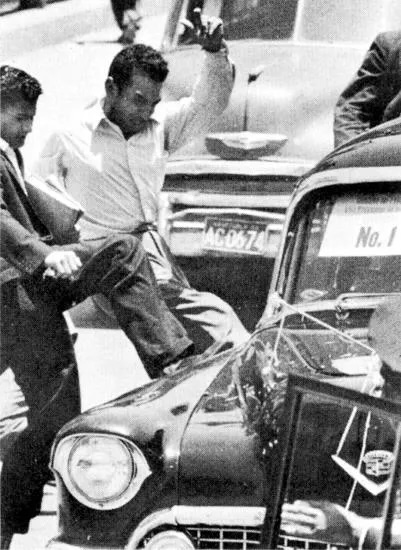
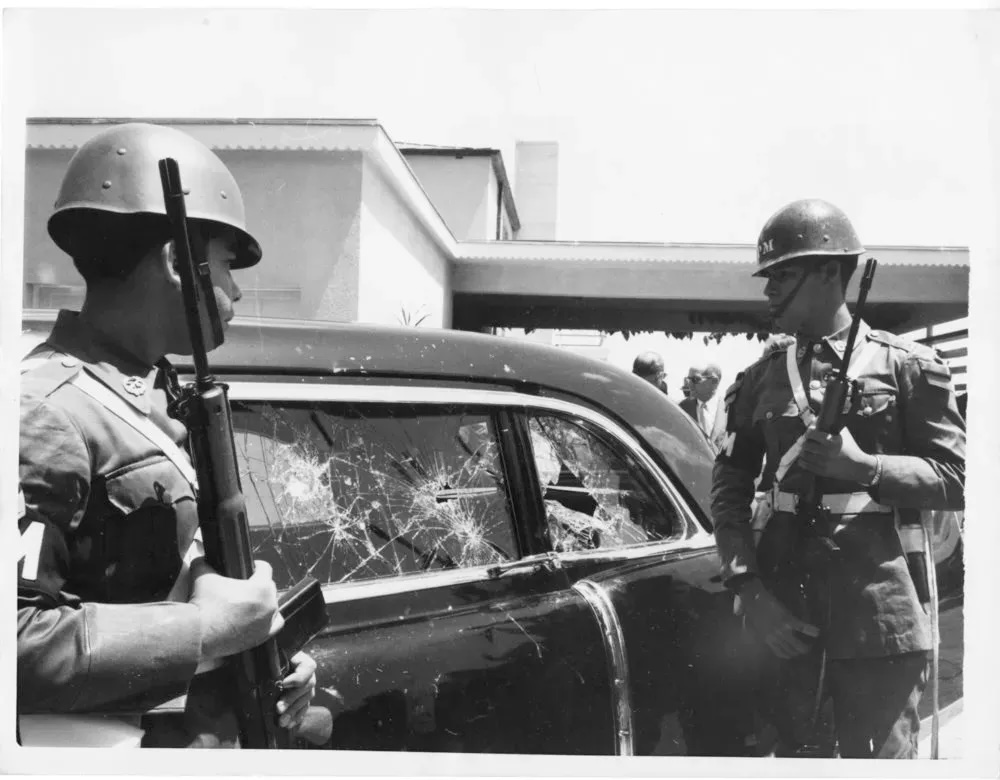
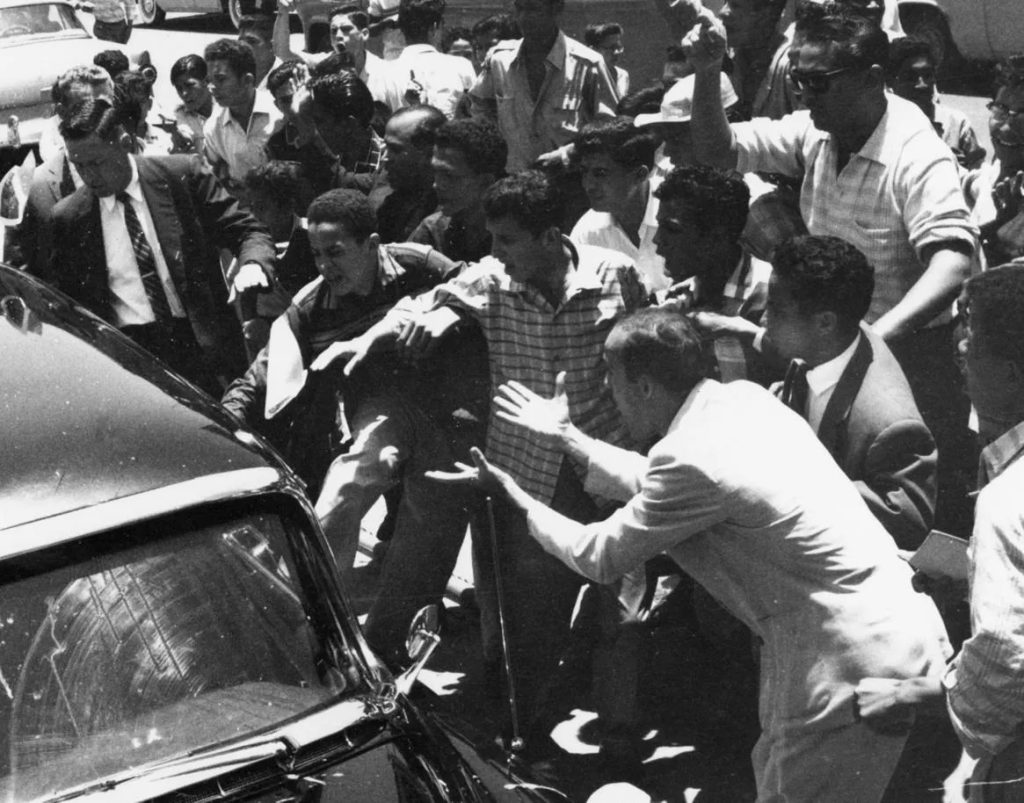
The assault on Nixon’s automobile was frighteningly physical. As the caravan slowed in heavy traffic in the working-class Catia district, rioters surged toward the vice president’s limousine from both sides of the street. They tore the American and Venezuelan flags from the car and hammered its body and doors with clubs, pipes and brass artillery-shell casings. Stones described by contemporary reporters as roughly the size of grapefruit were hurled repeatedly against the supposedly protective safety glass. The barrage became so severe that the glass began splintering inward, showering the occupants. At least one fragment struck Nixon near the temple, close to his right eye, although he was not seriously injured.
The mob did not merely throw objects from a distance. Men crowded directly against the limousine, beat on its roof and windows, kicked its sides and attempted to immobilize it. Nixon’s motorcade was trapped as the crowd pressed tighter around the vehicle. At various points the attackers began rocking the limousine from side to side in an apparent attempt to overturn it with the vice president and the other passengers still inside. Other accounts describe rioters using heavy objects almost as battering rams against the thick windows. For somewhere around a quarter of an hour, Nixon and those around him could not know whether the glass would hold, whether the crowd would succeed in overturning the car, or whether an attacker might force his way inside.
Inside the automobile with Nixon was Lieutenant Colonel Vernon Walters, the brilliant linguist and Army officer who was serving as the vice president’s interpreter and who would later rise to major general, become Deputy Director of Central Intelligence and serve as U.S. Ambassador to the United Nations. Walters was himself wounded when the limousine’s glass shattered inward, cutting him around the mouth and leaving him, as he later vividly recalled, with a mouth full of glass. Venezuela’s Foreign Minister, Óscar García Velutini, who was also riding in the car, was cut as well. The official State Department account specifically recorded Walters’ facial injury and the Foreign Minister’s wounded arm.
Walters’ later recollection provides one of the most revealing eyewitness accounts of Nixon’s conduct during those minutes. Decades afterward, Walters told The Washington Post, “Nixon never lost his cool in that car.” Walters remembered the mob “beating on the roof and throwing stones” while Nixon remained composed. Even more remarkably, according to Walters, he continued acting as Nixon’s interpreter despite the glass in his mouth as Nixon verbally challenged members of the hostile crowd to debate him rather than attack him. Walters and Nixon would remember May 13 for years afterward with grim humor, referring to the anniversary as their “rock ’n’ roll day”—a reference to the rocks thrown at the limousine and the violent rocking of the car itself.
That testimony is particularly significant because Walters was not reconstructing events from a distant vantage point. He was inside the car, bleeding, as the attack occurred. His judgment was therefore based upon observing Nixon at extraordinarily close range under immediate physical threat. Nixon was not posing for cameras or delivering a prepared speech about courage. He was trapped in a battered automobile, surrounded by a screaming crowd, while glass broke around him and men attempted to rock the vehicle over. Walters’ recollection that Nixon never lost his composure is powerful evidence of how the vice president actually reacted when the possibility of serious injury or death became real.
Nixon himself later remembered the instant when the danger became unmistakable: “we might be killed.” The fear was hardly imaginary. Contemporary American reporting bluntly stated that his life had been in danger. A New York Herald Tribune editorial reprinted in the Congressional Record described his ordeal as a “trial by fire,” noting that the car was wrecked by stones and pipes, its glass broken, Walters cut by flying glass, the flags ripped away, and the automobile covered with spit and rotten eggs. Nixon’s response after emerging from the ordeal was characteristically defiant: “I’m all right. They cannot frighten me.”
What stands out most dramatically is Nixon’s composure while all this was happening around him. Secret Service agents believed the vice president’s life was in danger and prepared to use their weapons. Yet Nixon understood that gunfire into a Venezuelan crowd could transform a vicious street attack into an international catastrophe. Accounts of the incident record that he instructed the agent in charge, Jack Sherwood, not to open fire except on Nixon’s order. No shots were fired. It was an extraordinary exercise of restraint: Nixon was not making this decision from the safety of Washington but from inside a besieged automobile whose windows were being smashed while a mob attempted to overturn it. The Nixon Presidential Library today describes his “calm resolve” as helping prevent an already explosive confrontation from becoming an even more serious international incident. The Library’s collection still contains shattered glass from Nixon’s limousine and unused ammunition carried by American security personnel that day.
Nor was Washington treating the danger as political theater. Within hours, the highest levels of the Eisenhower administration were contemplating emergency military measures. Admiral Arleigh Burke ordered 500 airborne Marines prepared for immediate dispatch to Caracas, subject to State Department clearance. Secretary of State John Foster Dulles was told that officials did not know how they would safely get Nixon out of the country, and the possibility of using a helicopter was discussed. Eisenhower’s position, relayed by his aides, was unmistakable: if Venezuela could not guarantee the vice president’s safety, the United States was prepared to consider doing so itself.
The ordeal also revealed something about Nixon that his political caricature has often obscured. He possessed remarkable physical courage. This had already been demonstrated days earlier in Lima, when he confronted hostile demonstrators rather than hiding from them; President Dwight Eisenhower personally wired him that his “courage, patience and calmness” had earned him new respect at home. Caracas presented an incomparably greater test. Nixon had Pat nearby, members of his party were bleeding, security had broken down and there was no certainty that the mob could be stopped. Yet there is no record of Nixon panicking or losing command of himself. His concern remained both getting his party to safety and preventing his protectors from responding in a manner that could cost Venezuelan lives. Walters’ eyewitness testimony—“Nixon never lost his cool in that car”—provides perhaps the most concise verdict on his behavior during the crisis.
There was also substantial contemporary evidence that the violence was not merely a spontaneous eruption of anti-American sentiment. American officials on the scene reported to Washington on May 13 that the attack was “undoubtedly” organized by Communists. The State Department’s subsequent analysis concluded that the confrontations had been directed primarily by communist-led organizations. Two weeks later, CIA Director Allen Dulles reported that the demonstrations in Lima and Caracas had been well organized and were “undoubtedly Communist instigated,” although his assessment importantly added that the Communists were exploiting authentic Latin American grievances over aspects of American policy. Thus, calling the Caracas violence communist-inspired is not a retrospective political embellishment; it reflects the assessment recorded in official American documents produced at the time.
Indeed, the organization and escalation of the demonstrations were difficult to miss. Nixon had encountered agitation elsewhere on the tour, but Caracas was different in its coordination and violence. Demonstrators were waiting at the airport; another hostile concentration had assembled at the Bolívar tomb; roadblocks impeded the motorcade; and crowds repeatedly converged on Nixon’s vehicles. The Congressional Record noted contemporary reports that the disturbances had escalated from jostling in Buenos Aires to stone throwing in Peru and finally to the far more dangerous violence in Venezuela. Whatever legitimate political grievances existed in Venezuela, attacking the official representative of the United States, smashing his automobile and attempting to overturn it with the vice president and other passengers inside had passed far beyond political protest.
Nixon also refused to allow the attackers to turn the episode into an indictment of the Venezuelan people. That distinction was important. The Communist organizers and violent demonstrators did not represent Venezuela, and Nixon knew it. The State Department reached much the same conclusion, believing that revulsion at the violence among ordinary Latin Americans might ultimately undermine the radicals who had organized it. Even Eisenhower, while condemning the incidents, emphasized that they could not erase the underlying friendship between the peoples of the Americas. Nixon’s refusal to respond with indiscriminate hostility was therefore more than good manners. It served the diplomatic purpose for which he had undertaken the trip in the first place.
America’s reaction when Nixon came home demonstrated how profoundly the episode had affected the country. On May 15, the vice president and Mrs. Nixon landed at Washington National Airport to a reception almost unimaginable for an ordinary vice-presidential return from a diplomatic tour. Contemporary reporting estimated the airport crowd at more than 15,000 people—ordinary citizens, students carrying welcoming signs, bands, diplomats, members of Congress, Cabinet officials and President Eisenhower himself. Even political opponents joined the reception. Senate Majority Leader Lyndon Johnson was among those who welcomed Nixon home, greeting him warmly in a remarkable display of bipartisan solidarity. What had begun as a goodwill tour had ended with the country rallying around a vice president who had faced unmistakable physical danger abroad.
The Caracas attack deserves to be remembered as more than an exotic Cold War anecdote. Nixon went into an exceptionally hostile environment as the representative of his country, was subjected to personal humiliation, saw his wife abused, found himself trapped inside an automobile under a potentially lethal assault, and nevertheless maintained his composure. The shattered windows, the stones and clubs, Walters bleeding from the mouth, the attempt to rock the limousine over, armed Secret Service agents waiting for permission to fire, and Marines preparing for possible deployment all demonstrate how serious the danger actually was. Nixon neither surrendered his dignity nor permitted panic to dictate his actions. That is why he later chose the South American journey as one of the defining episodes in his book, Six Crises, and why the battered limousine glass and unused ammunition carried by American security personnel were eventually preserved as historical artifacts. Whatever judgments history makes about the long and complicated political career of Richard Nixon, Caracas provides unusually tangible evidence of one quality that even many of his adversaries came to recognize: when confronted by genuine physical danger, Richard Nixon was a man of courage.
People around DSA Mayor Zohran Mamdani have been talking about a coordinated pressure campaign on the CEOs of the city’s largest employers. Sources told the New York Post the plan is a run of targeted posts meant to isolate certain business leaders while City Hall pushes a larger tax package into early fall.
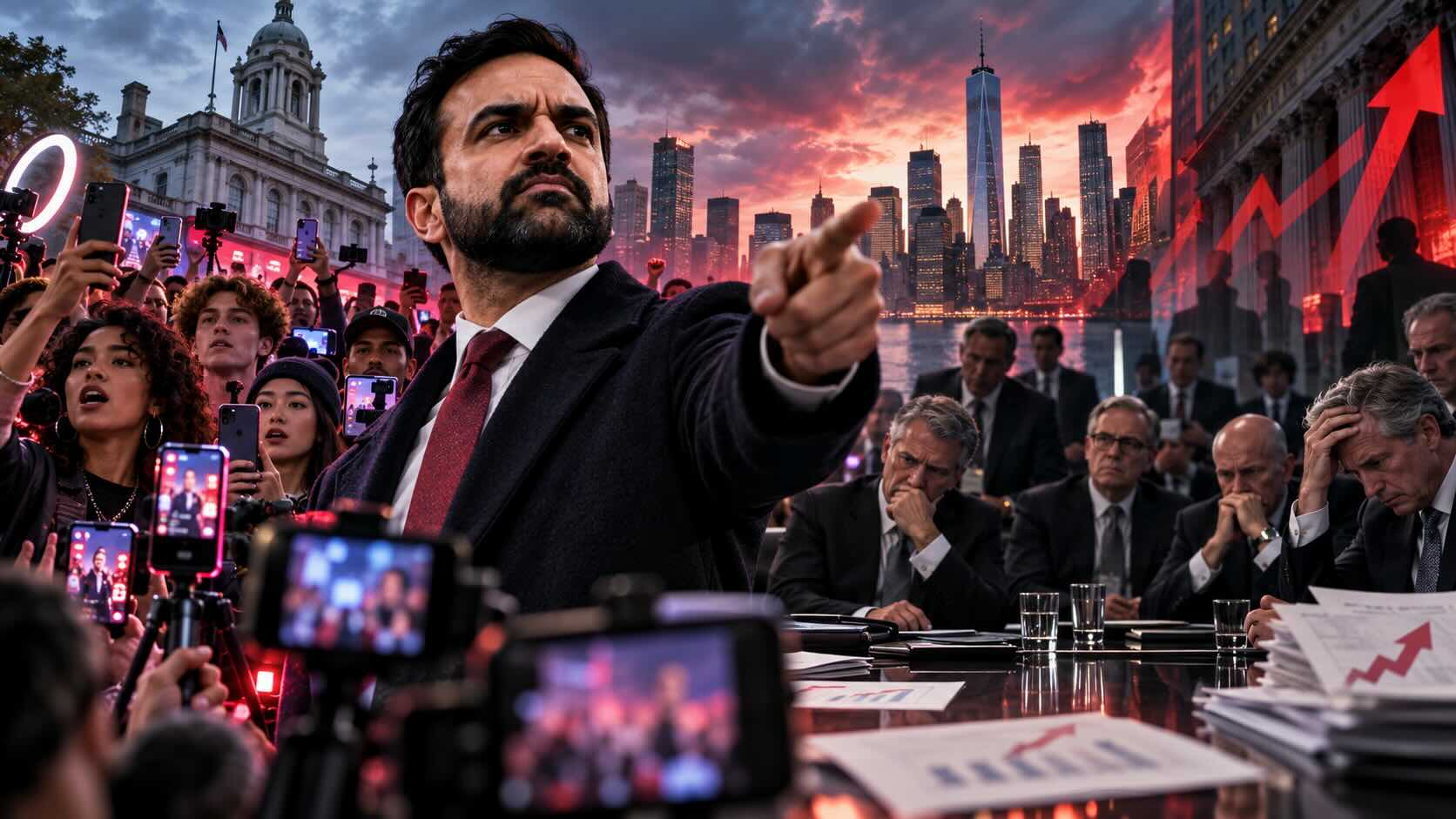
The September 28 exclusive said the “bullpen,” Mamdani’s inner circle, is preparing coordinated smears against top New York CEOs. The vehicle is his 200-strong “influencer army,” described as a taxpayer-funded digital operation, a troll farm in all but name. The aim is to bash those executives and sell the public on his tax-and-spend agenda.
Two aides were named as leading the digital side: Tascha Van Auken, 50, director of the Office of Mass Engagement and a veteran DSA organizer who ran Mamdani’s campaign ground operation, and Emilia Rowland, director of new media and cultural communications and a former DNC press secretary.
Mamdani aides and DSA organizers, coordinating in Signal chats, planned a campaign against Partnership CEOs and board members.
A Daily Wire / Manhattan Institute review of accounts in City Hall’s Signal chat orbit found posts backing police and prison abolition, dismantling ICE, and attacking Israel. Christina Brown, @missxtinab, celebrated Charlie Kirk’s assassination, writing “violence was an answer,” said ICE agents should be poisoned, and wrote that she hates America and wants it to fall. Megan Klink of Pretty Informed Girls called ICE “a f*ing Gestapo.” Cassie Willson, who has filmed with the mayor, posted: “Free Palestine, f*ck Donald Trump . . . billionaires shouldn’t exist . . . no war but class war.” Matt Bernstein framed a Hezbollah-inspired synagogue attack as “violence begets violence.” City Hall has released no full roster. Rowland said the office “engage[s] broadly and in good faith, including with people who may disagree.” The posts are the record.
Their first institutional target is the Partnership for New York City. Kathryn Wylde is out. Steve Fulop, the former Jersey City mayor, took over in January. One source said the plan was to “blindside” Fulop because he is new. “They want to punch Fulop in the face,” the source said. “Kathy Wylde knew the ropes. Fulop is new, so there’s never been a better opportunity to go at CEOs.”
More attacks on the Partnership board are planned through year’s end. Names already floated included Pfizer CEO Albert Bourla, over drug prices, and Related Companies CEO Jeff Blau, tied to a $2 billion Hudson Yards expansion. “Anybody is fair game as long as you’ve got money,” one person briefed on the plans said. “There is a menu of options that is presented to the mayor.”
The calendar is the point. Mamdani wanted the tax-the-rich agenda out in early fall to lock in state money at the start of 2027. He is seeking a two-percentage-point hike on incomes over $1 million and a rise in the top corporate rate from 7.25% to 11.5%. Combined with existing city and state levies, the top marginal rate on the city’s wealthiest would reach 16.8%, the highest in the country.
The Citizens Budget Commission has projected a $13.2 billion gap by fiscal year 2028. One Democratic insider doubted the tactic would move its targets. “Do they seriously think Jamie Dimon, who is responsible for overseeing $5 trillion in assets, is going to buckle because a few teenagers are pressuring him on TikTok?”
The timing is also a headache for Gov. Kathy Hochul as she faces a Republican challenge from Nassau County Executive Bruce Blakeman. Pfizer chairman and CEO Albert Bourla donated to her first campaign for governor, and Pfizer’s PAC has given more than $36,000 to state Democratic groups. Ryan Adams of Actum said Wall Street still treats Hochul as the adult in the room, “until somebody makes her choose.”
City Hall denied it. Spokesperson Dora Pekec said: “This is categorically false. The New York Post is publishing a complete lie.” She refused to identify any specific inaccuracies. The Partnership was approached for comment before publication.
Griffin later called the stunt “creepy and weird,” said it endangered his safety, and raised pulling a $6 billion Park Avenue project. Citadel also has a headquarters in Miami.
After a closed-door meeting with the mayor in May, Dimon said he has seen mayors “fail abysmally because they can’t administer themselves out of a paper bag, or ideology blinds them to practical, realistic, real-world policy.” In his April shareholder letter he wrote, “Individuals vote with their feet,” and described “a fairly large exodus of people and jobs out of some states with high taxes and high expenses.” He has pointed to that shift toward lower-tax states, including Texas, where JPMorgan has grown its headcount while cutting jobs in New York City.
That is the bet City Hall is making in a city that still lives off the jobs and tax base of these companies and residents. A DSA mayor, a taxpayer-funded influencer army, and a plan to isolate the people who write the largest paychecks. DSA politics wants the money and treats the people who produce it in New York City as props for its unsustainable agenda.
The traditional tort system is well equipped to solve twenty-first century issues.
Many artificial intelligence experts believe our society faces only one serious political question: How will we prevent AI from destroying humanity? Such fears were deepened by the recent report of a “swarm” of OpenAI agents hacking into the company Hugging Face on their own initiative. Those concerns have led to calls for new bureaucracies to oversee frontier AI labs and monitor new model releases.
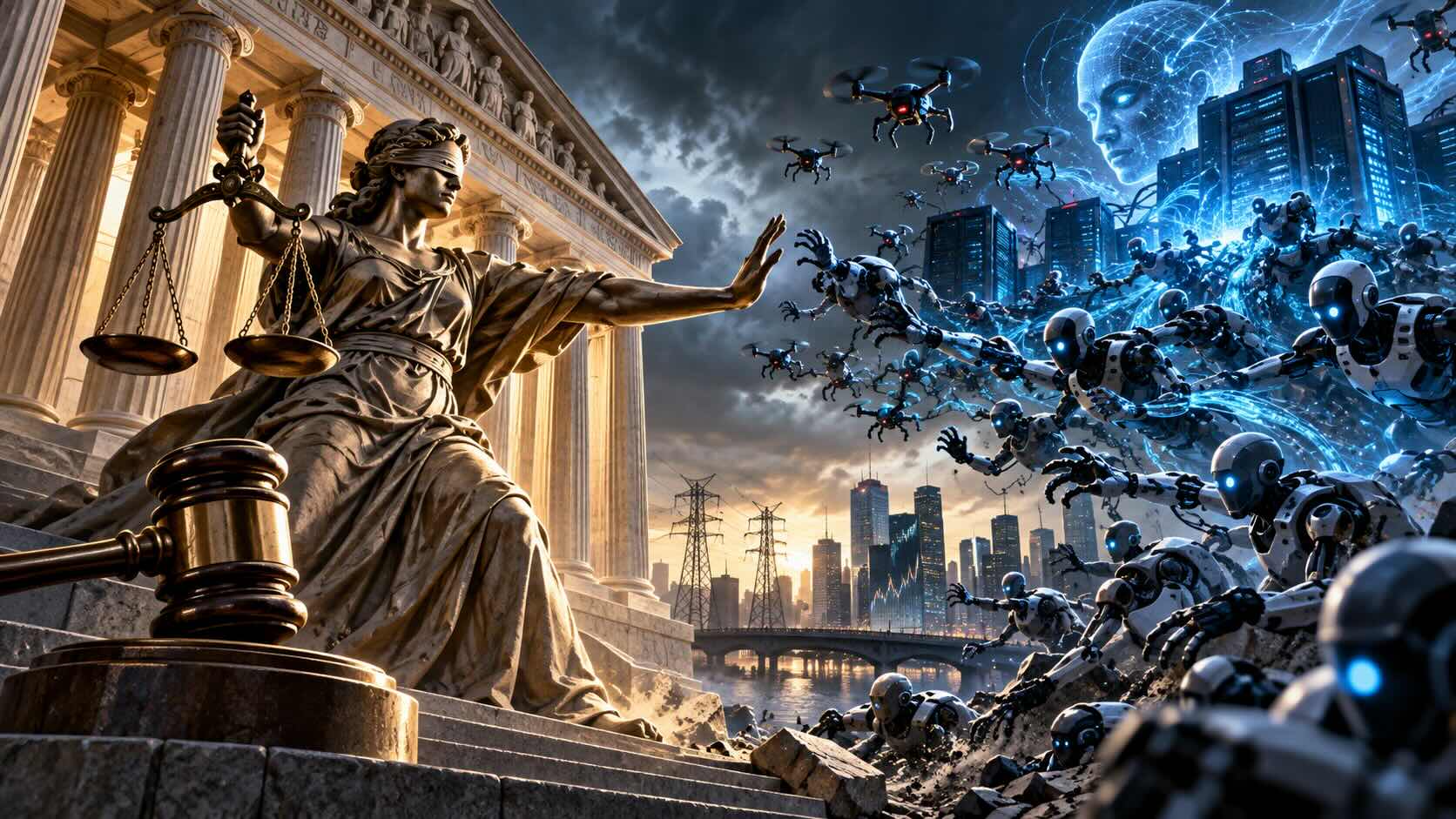
But there is a better approach to AI safety, one that runs through the old-fashioned legal system. Torts, or legal claims for damages against a company, may provide the best mechanism to prevent the dangers of AI while preserving its advantages.
Whenever a new technology emerges, society debates whether to regulate it through the market, through lawsuits, or through bureaucracies. The competitive play of the market forces companies to treat their customers well. So long as most of the “dangers” of a new product fall on the paying users themselves, the market should keep companies honest, especially when paired with general consumer-protection laws against fraud or negligence.
If a product creates dangers to non-customers or outsiders—what are known as “externalities”—society needs some other mechanism to make business pay. Throughout much of English and American history, lawsuits under the common law served that purpose. Those injured by a business could make a tort claim against the business and collect damages that were supposed to make the injured party whole. The damages awarded were meant to be commensurate with the costs imposed, providing the right level of incentive for the business to avoid them. If courts had concerns about a business causing damages that could not be detected or extended beyond the suing party, they could award “punitive” damages to make sure the business paid extra attention.
Thanks to the rise of the regulatory state, however, Americans have tended to forget the benefits of regulation through tort lawsuits. But there are reasons to believe that AI is well-suited to tort litigation, as long as we focus on real harms to outsiders and not on speculative ones to customers.
Outside of copyright cases, most litigation against AI companies today involves people suing AI labs for giving out bad advice or encouraging bad behavior. These are little different from lawsuits against Facebook or YouTube for being addictive and ostensibly harming their users by forcing them to use the product too much. In general, such lawsuits demonstrate the worst of our tort system: they encourage consumers to avoid personal responsibility and allow trial lawyers to get massive payouts vastly disproportionate to any plausible harms. The idea that we should treat Big Tech, including AI companies, like we treated Big Tobacco, is exactly the wrong idea. Instead, we should focus AI tort liabilities on harms that companies cause to noncustomers.
Potential tort liability has the benefit of putting the onus on companies themselves to game out dangerous scenarios and prevent them. As Joel Wertheimer and Jerusalem Demsas have pointed out, torts should require the “cheapest cost avoider” to suffer the consequences of bad behavior. Since AI frontier labs can engineer around harms caused by their models much easier than outside individuals can predict or avoid them, they should be assigned liability for any damages.
By contrast, a bureaucratic model of AI control requires outside experts to predict where and when damages might occur and try to prevent them by fiat. That approach forces AI companies to follow bureaucratic rules and procedures rather than try to figure out themselves what sort of harms might cause the most damage. However well-meaning and intelligent such experts are, they will never have the insight into the dangers of AI that the frontier labs themselves possess. They also will not have the same incentive to prevent harms as the labs would if faced with tort claims.
Some worry that regulation by tort fails when defendants don’t have enough money to pay for the damages. In many industries, fly-by-night operators can put out dangerous products and disappear with the profits before liability hits. Industries like car dealerships or freight brokers are required to post bonds to ensure they have enough cash for potential liabilities. Even in established industries, the harms may be so great that no company could bear them, which is why the nuclear industry requires a separate government backstop in case of a meltdown.
Yet frontier AI labs are already some of the most valuable companies in the world. Both Anthropic and OpenAI have valuationsapproaching $1 trillion. That value would be under imminent threat in a situation where their AI swarms broke out and caused real damage. If some start-up or open-source companies create AI models advanced enough that they pose real threats, it might be reasonable to require bonding or insurance against tort claims to ensure injured parties can be made whole. But for now, the frontier labs’ own value should provide enough of a “hostage” to encourage good behavior.
Some may argue that there is no way to create liability for existential risk to humanity because there won’t be courts or even humans left to sue. But that misunderstands how AI risks will develop. AI will not putter along causing no damages for years before it suddenly wakes up and decides to destroy humanity. The actual dangers of AI will manifest gradually.
The Hugging Face incident, for all the kerfuffle, did not cause major disruptions for the company. There will doubtless be another AI incident that does cause significant damages. Perhaps an AI swarm shuts down a power plant, causing billions of dollars of harm to a city. Or perhaps AI breaks into banks and scrambles a bunch of accounts, wiping out hundreds of billions in value. Events like these, if they occur, would happen long before humanity faces more devastating risks.
The benefit of the tort system is that it forces those companies to avoid such harms in their own self-interest and mitigate them step by step. The constant pressure of liability will help ensure the “alignment” of AI models with those of the general public before a big catastrophic event occurs. Indeed, some of the recent delays in AI model releases might be as much about liability concerns as any altruistic attempt to prevent harm to the public.
There are many open questions about how to shape tort law for AI. University of Houston law professor Gabriel Weil argues for a “strict liability” system, whereby any harms caused by AI automatically create liability, which can be combined with punitive damages for some particularly dangerous activities. Yale Law School professor Ketan Ramakrishnan argues that requiring plaintiffs to prove the negligence of AI companies would be a better model (though he also supports a bureaucratic regulator). Others suggest we should require criminal liability for harms caused by AI, as we do for food and pharmaceuticals manufacturers. In general, American lawmakers and courts need to clarify the potential tort claims against AI now to ensure better behavior in the future.
AI safety mavens want to make sure the technology is aligned with the wishes of humans instead of following its own, potentially destructive, ends. The best way to do that is to harmonize the incentives of the companies making AI with those of the public. A new bureaucratic morass would just orient the companies to the demands of a small, unrepresentative group. The traditional American solution of allowing the market to reward good products sold to customers while having lawsuits punish bad behavior will be the best path to true alignment.
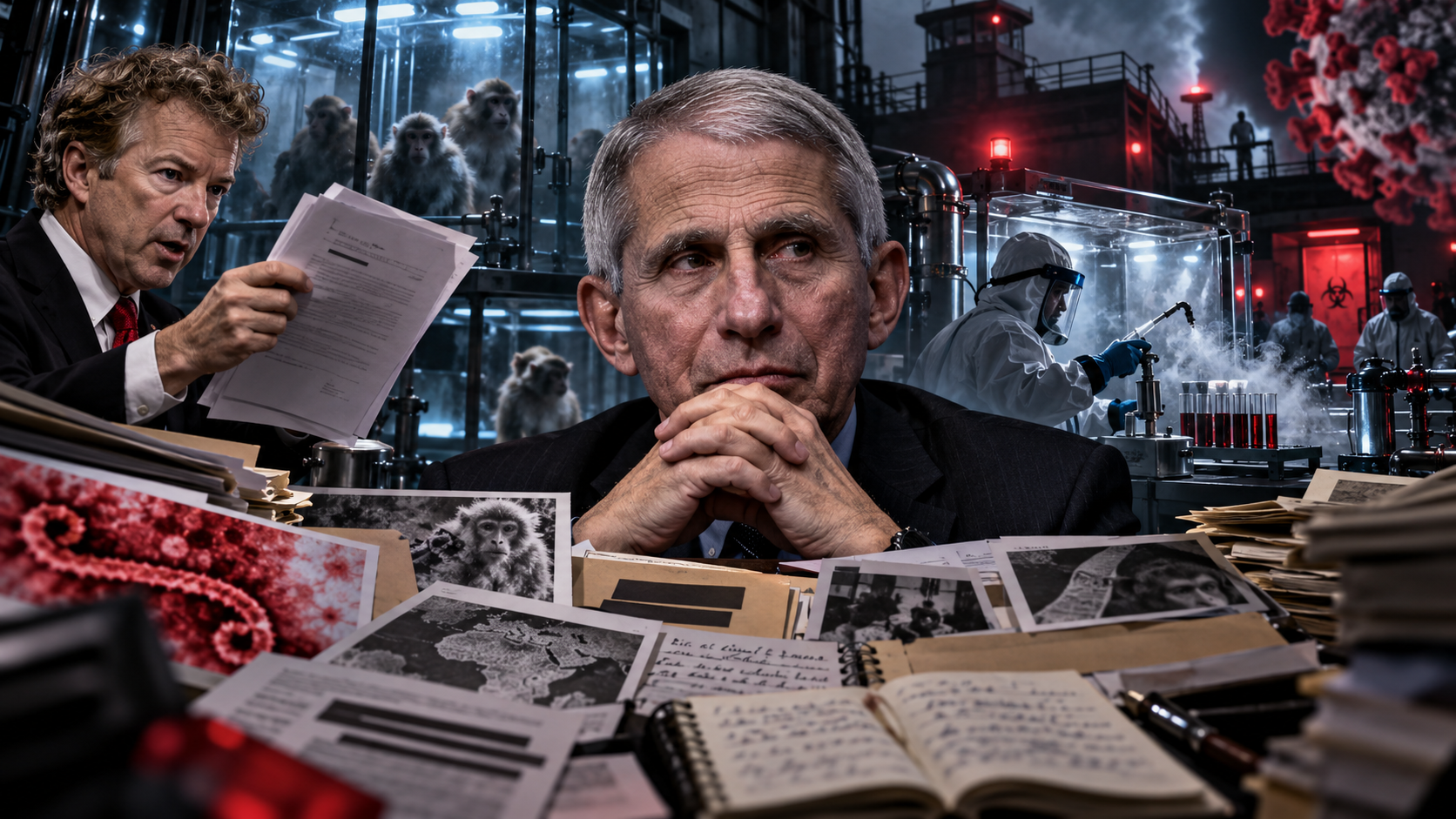
Senator Rand Paul released additional diary pages and mail from the desk of American Mengele, Dr. Anthony Fauci. In 2015, under a NIAID task order, USAMRIID at Fort Detrick exposed vaccinated monkeys to aerosolized Ebola engineered to drive the virus deep into the lungs.
Eighty percent of the vaccinated animals needlessly died horrible painful deaths with ruined tissue over the abominable experimentations. Unvaccinated controls in the operation, on the other hand, lived. On March 7, 2016, Fauci wrote that the USAMRIID people were idiots and that the experiment should have been classified.
Two days later he was still stunned that Defense had sent the data to the FDA and circulated it as a notice to embassies in West Africa on the eve of a larger vaccine trial.
NIAID’s biodefense director talked about damage control. Cliff Lane flagged dual use. Peter Jahrling warned that treating aerosol challenge as dual-use research of concern would gut medical-countermeasure work, then said he would keep the rest off email. With Ebola paused, he added, they would queue the coronavirus study for when the lights turned green. This is the nature of the “public health” priesthood in its own handwriting.
Gain-of-function arguments were never abstract. An aerosol Ebola challenge on vaccinated primates, funded by the institute Fauci ran, was the norm. He failed to bury his crimes on this occasion. Just imagine how much more there is to uncover. Fauci may turn out to be one of the most evil, treacherous and soulless demons ever to wear a skin suit.
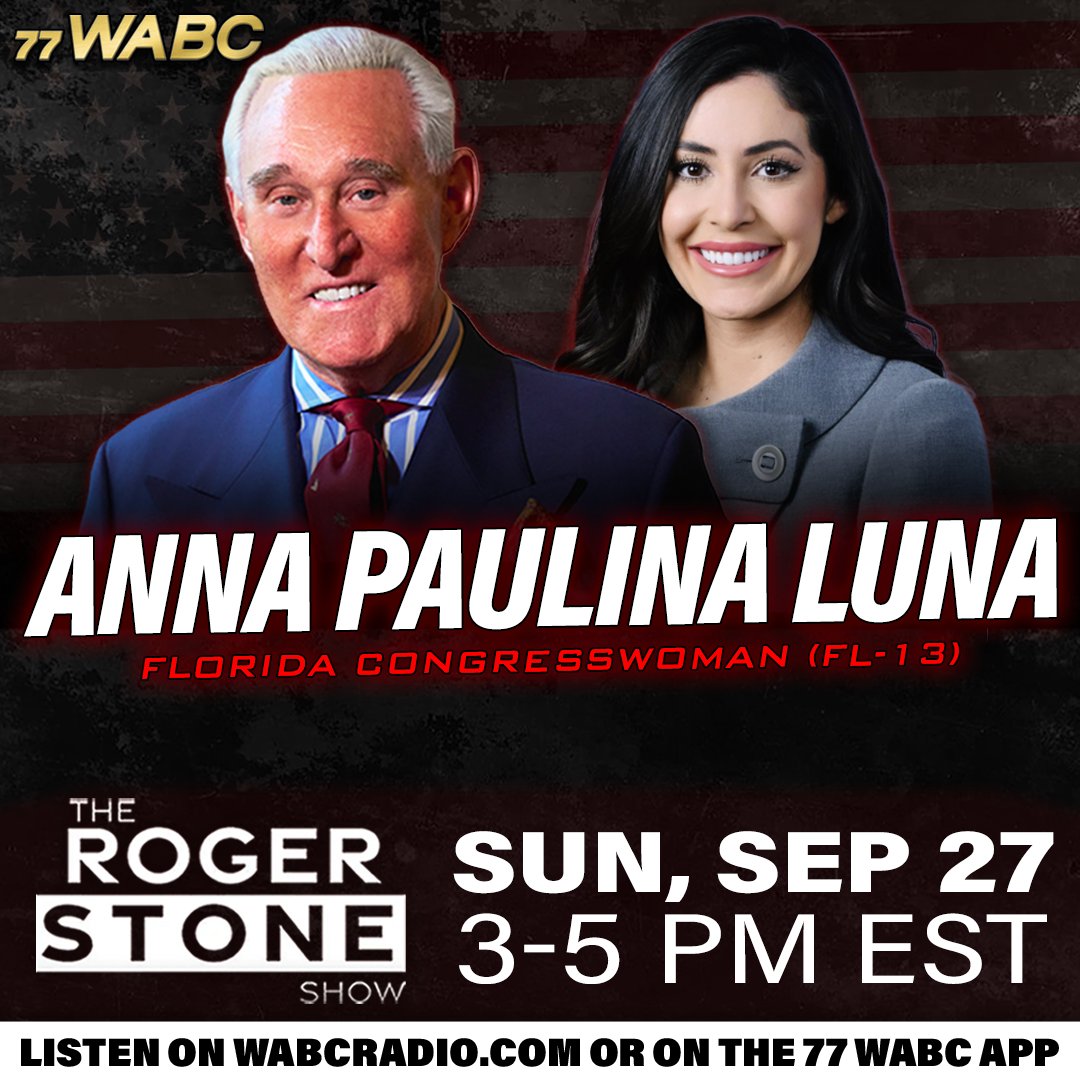
@77WABCradio TODAY! Roger Stone hosts The Roger Stone Show Sundays from 3–6pm on 77WABC, offering insider political analysis and unfiltered commentary on Washington, national affairs, and the biggest stories shaping
Lawfare, Pardons, and the Importance of Voter ID Step into The Stone Zone for a packed Sunday afternoon show. Joins The StoneZONE on 77 WABCLISTEN LIVE — 8 PM ET:
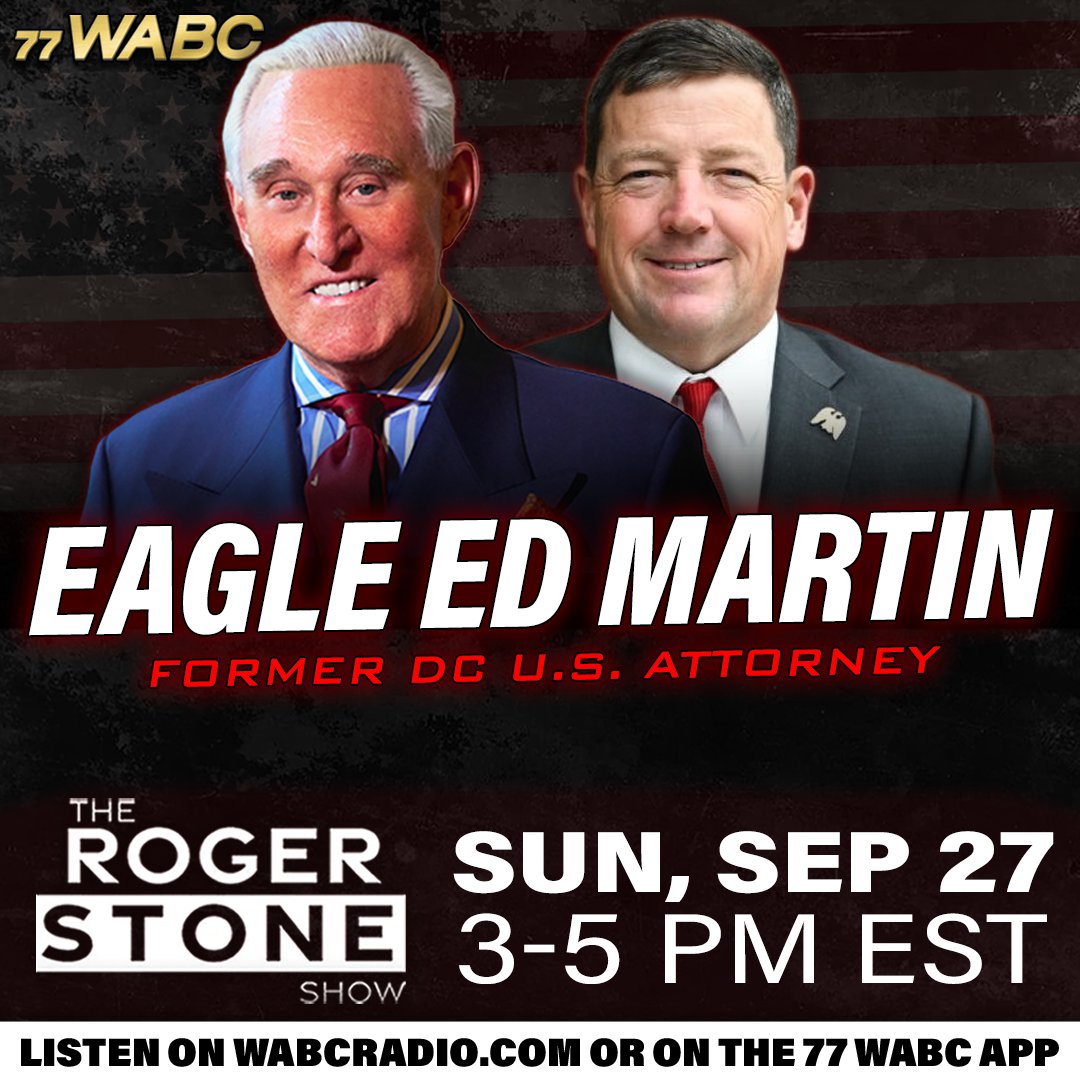
Ed Martin: Protecting The 2nd Amendment @EagleEdMartin joins The Roger Stone Show on 77WABC Radio today! Joins The StoneZONE on 77 WABCLISTEN LIVE — 3 PM ET: http://WABCRadio.com
Rep. Anna Paulina Luna: Declassification, Election Integrity & the Fight Against the Establishment @realannapaulina joins The Roger Stone Show on 77WABC Radio today! Joins The StoneZONE on 77 WABCLISTEN LIVE
Roger Stone is a seasoned political operative, speaker, pundit, and New York Times Bestselling Author featured in the Netflix documentary Get Me Roger Stone.
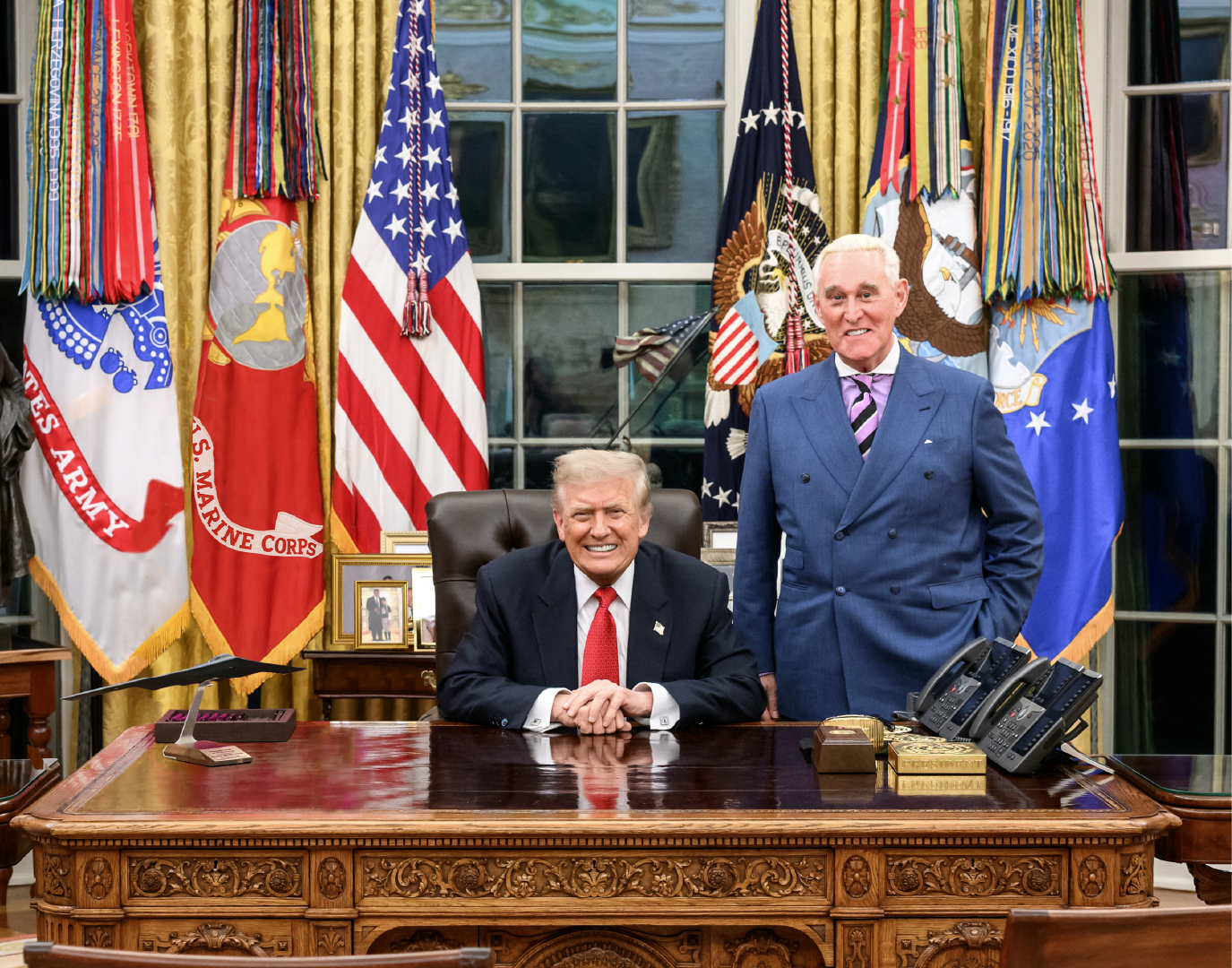
Richard Nixon, Ronald Reagan, and Donald Trump—all of these Presidents relied on Roger Stone to secure their seat in the Oval Office. In a 45-year career in American politics, Stone has worked on over 700 campaigns for public office.
“Roger’s a good guy. He
is a patriot and believes in a
strong nation, and a lot of
other things I believes in.”
Stone’s bestselling books include The Man Who Killed Kennedy: The Case Against LBJ, The Bush Crime Family, The Clintons’ War on Women, The Making of The President—How Donald Trump Orchestrated a Revolution, and Stone’s Rules with a forward by Tucker Carlson.
For the last 15 years, Roger Stone has published his International Best & Worst Dressed List. Stone is considered an authority on political and corporate strategy, branding, marketing, messaging, and advertising.
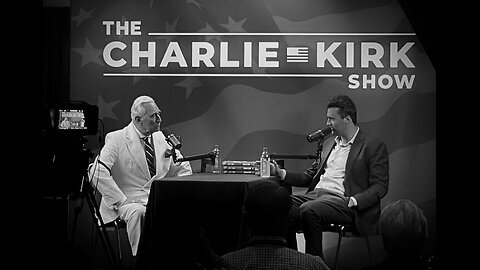
Stone is the host ofThe StoneZONE on Rumble and is also the host of The Roger Stone Show on WABC Radio.